This week with a Supreme Court showdown. The justices are set to hear oral arguments on Thursday in a case that could upend the 2024
presidential race as they consider
whether Donald Trump can be removed from the primary ballot in Colorado.
That state's High Court ruled in December that the former president is ineligible
to hold office under Section 3 of the 14th Amendment, which prohibits an officer of the United States who took an oath to support the Constitution
and then engaged in insurrection from holding office again.
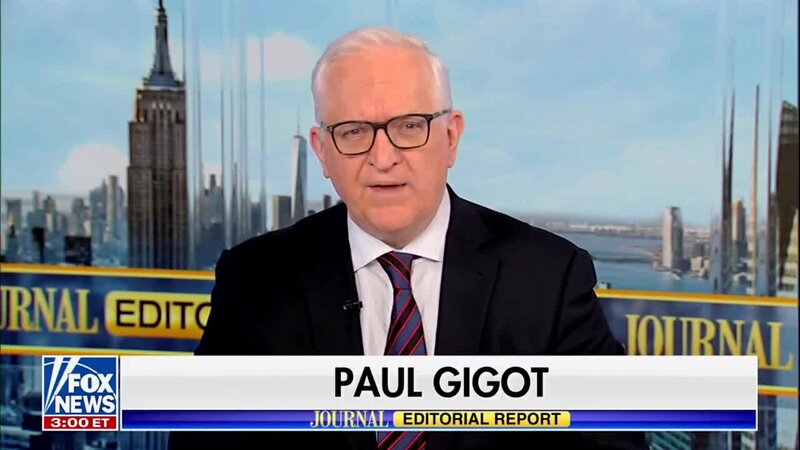
Let's bring in former attorney general of the United States, Michael McKayse. Judge, welcome back to the show. Good to have you here. You've written, for us in fact, that the president of the United States
is not covered by the disqualification
clause of section 3. Why not?
Right.
First of all, the presidency
is not an office under the United States.
It
has its independent source of power. It's a mistake to say it's under the United States. But passing that, the question of whether He violated an oath that he took as an officer of the United States.
He took an oath as president.
That's prescribed in section 2.
Oaths of officers of the United States are in section, or in article 6. That he took an oath to support the Constitution.
That's the violation.
The oath that he took was to preserve, protect, and defend.
Different wording.
And understand these words were not picked out of the air by the people who framed the 14th amendment.
They were in the prior constitution,
so they used
words to mean the same thing that they meant in the constitution
as it existed before. So if you're a textualist judge or an originalist judge, you're looking at that language, you think it's pretty clear call. It's just not covered. Yeah. I mean, there's also, there are 3 clauses in the constitution
that refer to what the president does that show that he's not an officer of the united states 1 thing he's obligated to do is to nominate and appoint all officers of the United States. He doesn't appoint himself.
So therefore he's not an officer of the United States.
Another clause says that he commissions
officers of the, all officers of the United States. Doesn't say all other officers, It says all officers. He doesn't commission himself.
I guess
some of the supporters of the disqualification
of President Trump say, look,
of course the framers
wanted the president covered. They assumed
that he would be covered because they obviously didn't want Jefferson Davis, this was drafted in the wake of the Supreme Court, to be able to run for president someday.
Interesting, they weren't worried about Jefferson Davis, number 1. Number 2, the words president and vice president of the United States were in
an initial draft
of section 3. They were taken out.
And the reason they were taken out was that they didn't want to fight over that. What they were worried about was what in fact happened.
Not Jefferson Davis,
but
the vice president
who
was sent
to the Senate as a senator, and
people were scandalized that the 11
Confederate states were going to reconstitute themselves
as a Confederacy.
So they barred people from serving as
appointed officials, and they barred specifically
them serving as senators
and members of the House, because that was what was being done
before
the 14th amendment was passed. Okay, now the court could decide that it decides this case on those grounds that you just decided, but there is this question lurking in the background of whether or not what happened on January 6th was an insurrection.
What do you think, and does the court need to get, reach that question? Court doesn't need to reach that question I don't think they will because it's fraught people have been debating that with
more more like more heat than light but
that the fact is nobody's been charged with insurrection not even the people who participated certainly not donald trump
and in fact the government's theory of those cases is not that he
engaged in an insurrection,
but that they were acting on their own. In their other charges against all these
other defendants who were tried.
So
that theory won't wash.
And the court might be prudent to avoid this question of insurrection because it's so politically
fraught. You will impassion people on either side if you actually delve into this. Particularly when there's no need for it.
But the trick will be
if they're going to decide it on
language
grounds of textualism textual language
then they're gonna have to convince people not only that they're correct but also that they're right
and those are 2 different things and that the second part may be a harder sell. It's got to be a good explanation.
There's another issue, which is that, let's assume for the sake of argument that the court allowed Colorado to strike the
president Trump for the ballot.
Other states have said, no, we don't agree with that argument. He is going to be on the ballot. And they've considered this question, the same question. So if they did go along with Colorado, the Supreme Court, we'd have a patchwork quilt of election laws. You have A crazy quilt of election laws where a candidate would be qualified in some states, disqualified in other states,
on the same ground
that is the question of the 14th Amendment, which the Supreme Court is supposed to be the final arbiter of. So that's another argument, even though it's not strictly a legal argument, is it? That's another argument for the court coming in here and declaring colorado
out of bounds with its right decision though that that should not be a consideration but it's definitely a benefit
what do you think
the Supreme Court will do
bottom line I
think they'll reverse The question is the ground on which they will reverse. There's a whole child's garden of grounds that they could use.
I just hope that whatever ground they use, they are unanimous, because I think that would
help validate whatever the decision is. If they go riding madly off in all directions, that kind of undermines
the authority of what they do, even though it shouldn't. Yeah, but you're absolutely right about that. Let's hope, and I think Chief Justice Roberts would like to have it unanimous. Thank you, Judge McKay. We appreciate you coming in.